Exploring Tharu Culture in Chitwan
Chitwan is not solely about rhinos and jungle experiences. Here lives one of the most vibrant indigenous communities of Nepal, the Tharu Tribe. The Tharu culture in Chitwan is closely associated with nature, customs, and simplicity. It exhibits a way of life that for centuries has evolved alongside nature.
Through their colorful dresses, symbolic tattoos, and the powerful rhythms of the Tharu Cultural dance in Chitwan, the Tharu present to the visitor a culture as bright as the jungle itself.
In this article, we will see where the origin of the Tharu culture lies and what exactly it represents-a living tradition that originates from the very spirit of Chitwan. While you are on the Chitwan Tour, everything will feel like a deja vu after you read this.
Who Are the Tharu?
The Tharu Community is one of the native groups of Nepal that live in the Terai plains that stretch across the southern border of the country. For ages, they have lived in close harmony with the dense jungles and fertile lands of this region. Adapted to the environment, the Tharus were historically uniquely resistant to malaria; hence, they flourished in areas where others could not.
Their culture is shaped by natural rhythms, forest-based living, and centuries of self-sufficient living. The Tharu, therefore, are not only the oldest people in Nepal but at the same time are some of the most resilient ones, keeping alive an enormous heritage, paying tribute to tradition, art, and ecological wisdom.
Types of Tharu People
Every group within the community has its specific traditions, variations of languages, and ways of life.
Some of the major groups of Tharu people are distributed across Nepal in the following manner:
Rana Tharu - They occupy the far-western Terai, primarily in Kailali and Kanchanpur districts. They are distinguished by their dress and systems of governance.
Dangaura Tharu - Dangaura Tharu are found in the mid-western region. They hold tightly to agricultural traditions and folk culture.
Kochila Tharu - Kochila Tharu live in the eastern Terai, along the districts of Morang and Sunsari. This group is considered important according to the perspective of the Tharu Language and rituals.
Kathariya and Chitwania Tharu - These groups are located in and around Chitwan, and maintain strong links to ancestral practices. They are closely tied to the forested landscape of Chitwan.
With their deep-rooted flavor, each subgroup nurtures its cultural patterns-although common with the others in an admiration for nature, a fondness for life collectively, and spiritual traditions passed on from many generations. These, in turn, compose the rich and enduring heritage of the Tharu people.
Traditional Tharu Lifestyle

Every day is an activity in harmony with nature in the Tharu villages of Chitwan. There is a traditional way of building homes using clay, mud, and environmentally friendly materials. The houses are resistant to earthquakes and climatic conditions. The houses usually have lovely walls with symbolic paintings, spacious courtyards for family gatherings, and separate warehouses to keep their harvests.
Agriculture lies at the center of the Tharu life. Families grow rice, maize, and vegetables by the old methods, while fishing in nearby rivers and gathering wild herbs from the forest, which contribute to supplementary food and income.
Everything in a Tharu home-from the architecture to daily activities-is influenced by the land, the seasons, and utmost appreciation for the natural world. It will be a lifestyle that simplifies values for independence and community.
Tharu Festivals and Celebrations
Festivals are the heart of Tharu culture in Nepal. It is a bright canvas on which tradition, family relations, nature, and ancestor worship are portrayed.
Maghi Festival – Being the new year celebration for the Tharus, Maghi is the most important festival in Tharu society. Traditionally, though, it had seasonal significance-the beginning of the new cycle was marked by feasting, music, and dancing. Family members also make important decisions for the upcoming year at this time.
Jitiya – This is a very sacred festival. Tharu women observe this fast without water for the welfare and longevity of their children. It is a manifestation of this deep maternal love prevailing in their culture.
Holi & Diwali – These widely celebrated Hindu festivals are observed with a strange Tharu touch. On Holi, color dust fills the air with local songs and rituals; while on Diwali, earthen lamps enhance all places, ancestral offerings are made, and community gatherings proceed beyond the realm of decoration.
Every event is a link between Tharus, the time of the year, and the land. Festivals are much more than rituals: They are living traditions that continue to define the community and uphold cultural identity.
Tharu Clothes and Ornaments
The Tharu dress is a vibrant way of expressing identity, tradition, and craftsmanship. Each dress is handcrafted, colorful, and heavily symbolic.
Tharu Women's Dress
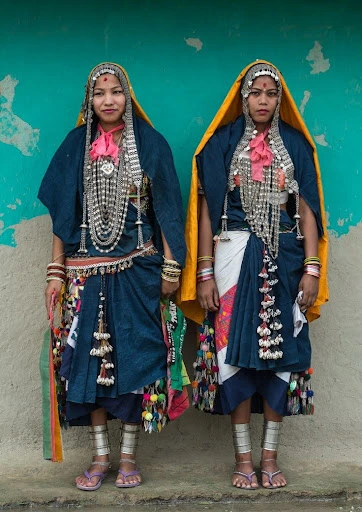
The Tharu females wear the Cholo, a short blouse, in conjunction with the Lengha, a long, flowing skirt often adorned with beads and coins. These dresses speak not only to status and region but to heritage, too.
Decoration is equally important. Women love wearing thick silver necklaces, large bangles, and heavy earrings, many of which denote marital or clan identity. The style and size of the ornaments are often used to indicate local customs and status.
Dress styles:
- Rana Tharu women commonly wear red-and-white contrast clothes with brash silver jewelry.
- And the Dangaura and Morang Tharus have their regional patterns and accouterments.
Tharu Men's Dress
Tharu men have traditionally worn white dhotis with a vest or shawl of some kind. The dress is kept simple yet dignified as it suits the agricultural life. In times of celebration or observance of a ritual, the men wear turbans and carry sickles (khurpa) as a proud symbol of their cultural identity.
Tharu Language
The Tharu language is extremely diverse and extension-rich, with each subcommunity speaking its own type. With the influence of regional languages or forms of Maithili, Bhojpuri, and Awadhi comes a linguistic fusion that displays the huge geographical dispersion of the Tharu people.
Historically, Tharu has almost solely been an oral tradition passed down from generation to generation through tall tales, songs, and storytelling processes. These oral traditions became crucial to the very existence of the history, values, and collective memory of the communities.
Today, there are efforts to further protect this cultural treasure. Community programs and education-based initiatives in places such as Chitwan support Tharu language learning within schools and community settings, so that future generations might communicate through the language, songs, and stories of their ancestors.
Tharu Tattoos and Art
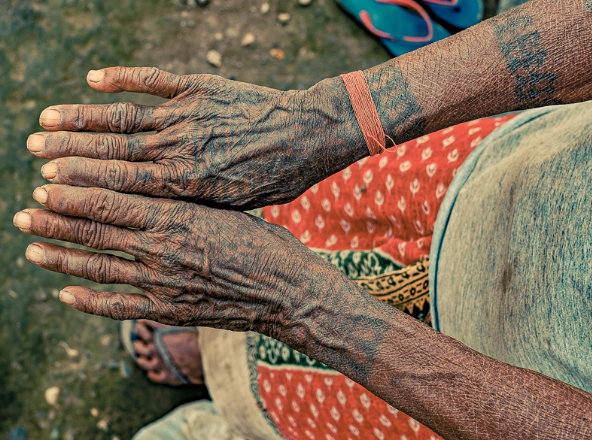
Among Tharu women, tattoos or Godna form a proud, deep-rooted tradition that is a symbol of identity, spirituality, and beauty.
Girls receive these tattoos as early as their coming-of-age ceremonies, usually with their mothers or elder women. The designs are generally tattooed upon the arms, legs, or chest, and sometimes the back, with every design having a different meaning. These are, therefore, instruments of the highest divine power used to protect individuals, offer spiritual strength, and connect them with traditions of their forefathers.
From times immemorial, Godna would be used in marking various rites of passage and the lady's standing within her community. The practice is slowly dying out among the young generation, especially in urban areas, and many old ladies in the Tharu community still wear their tattoos with pride, a living testimony to a timeless tradition. They also equally share a love for different kinds of art in their homes.
Tharu Cuisine: Taste of the Terai
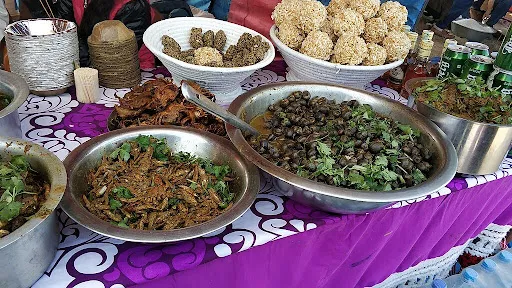
Tharu food is down-to-earth, flavorful, and aligned with the land's rhythms. Depending on what a river, meadow, or forest provides will mean that their cuisine will be not only practical but also loaded with tradition. Here are the signature dishes you will most probably get to taste during a Tharu community homestay in Chitwan:
Dhikri – They are soft steamed dumplings made of rice flour and are shaped into thick finger-like formations. A household dish during festivals like Maghi, and found as an offering of prosperity and good health, Dhikri is usually served with spicy lentil soup or meat curry.
Ghonghi – A Tharu specialty, local snails from wetlands are collected and slow-cooked in a spicy and slightly sour curry. The snails are eaten by sucking the meat out of theshelle The dish is adventurous and high in protein-aided by a traditional Tharu way of foraging.
Bagiya – Crescent-shaped dumplings that are made out of rice dough and filled with spicy lentils or a sweet mixture of sesame and jaggery. These are steamed or pan-fried lightly and are usually known to be eaten at festivals or offered during religious rituals.
Sidhara – Also known as Kantola at times, this is a preparation made from fermented and dried crushed fish mixed with taro leaves. Drying is spread over a couple of days, and minutes before serving, cooked into a curry.
Tharu cuisine is more than food; it’s a connection to the earth, a celebration of community, and a living tradition passed down through generations.
The Famous Tharu Cultural Dance Show
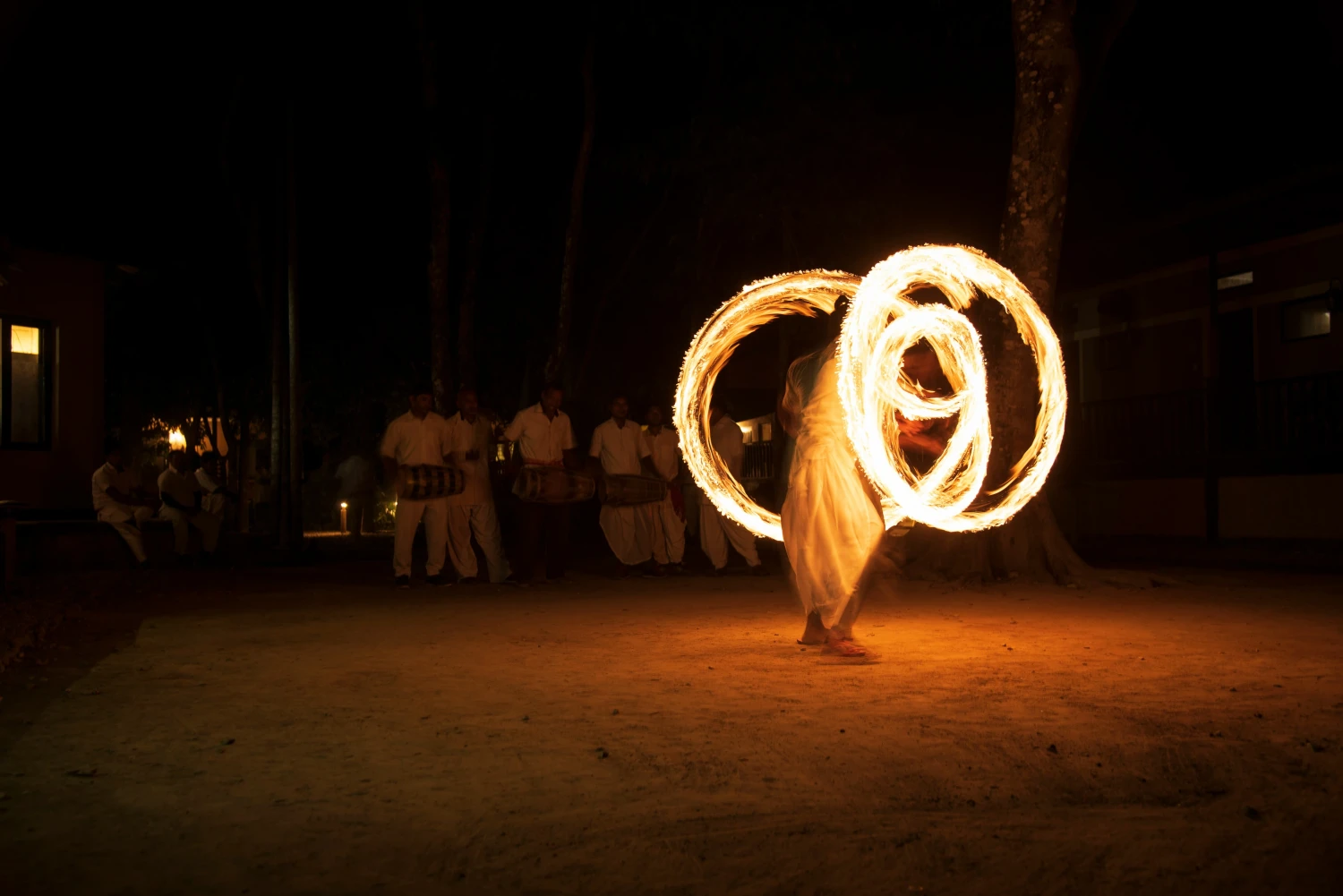
Among the unforgettable activities in Chitwan is watching a Tharu dance show-narrations of rhythmic movements, stories, and ancestral pride.
Almost every evening, these shows take place in Sauraha and display the Tharu way of life, culture, and arts. Dancers dress in colorful costumes and dance to the beats of drums, performing symbolic and energetic moves that were embraced by their ancestors.
Some of the exciting parts of the shows are as follows:
- Stick Dance (Lathi Nach): Holding the historical importance of Tharus using sticks to protect their land, it has evolved now into Lathi naach in the present time. This high-energy dance is where men hit their wooden sticks against each other, creating a fun environment.
- Fire Dance: The thrill of this dance finds men dancing barefoot over burning flames, a spectacle depicting courage and spiritual scintillation.
- Peacock and Harvest Dances: These are graceful and symbolic dances that glorify nature, seasons, and the livelihood of farming to the Tharu. The performers either imitate animals or celebrate through dance for a good harvest.
To offer a genuine and lively experience, Sauraha Tharu Culture House has been commended for the best Tharu dance show in Chitwan, where traditional choreography and hospitality coexist.
These performances represent more than just entertainment: they represent their identity living expression that continues to unite and inspire the Tharu spirit within the community. The visitors walk away with their hearts stirred by the energy, grace, and culture inhaled by the Tharu dance.
Visiting a Tharu Village
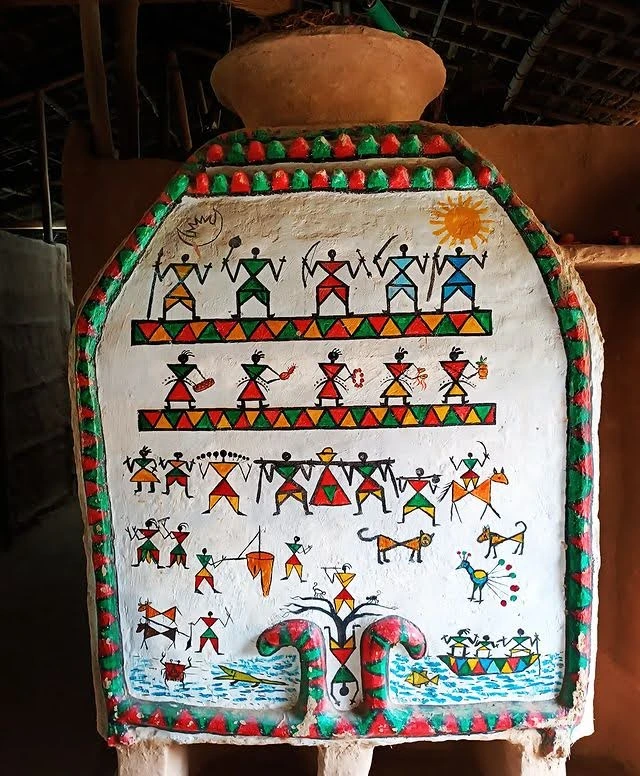
The real immersion in Nepali culture rarely happens without exploring the Tharu villages in Chitwan. Walking into a realm where tradition adorns nature and community in their daily lives.
The Tharu community homestay in Chitwan gives you the option of living with a local family, sharing meals, stories, and the way of life. You'll have practical experiences, such as cooking a local dish, working in the fields, or joining folks to dance under the stars.
One can interact with the elders who impart knowledge about oral traditions and ancient farming methods, all relevant to today's spiritual practices. It's more than just sightseeing; it's the spirit of bonding and cultural sharing.
Some of the more famous and authentic tourist spots:
Sauraha Tharu Village is known for its accessibility and friendly locals who are welcoming to tourists.
Tharu Village Resort (Chitwan & Nawalparasi) – For those seeking to embrace more culture, this would be the slightly more comfortable setup in Tharu life.
Tharu Village Tours – Offered by ecotourism and community-based travel agencies that stress sustainable and cultural approaches.
Whether you’re sharing tea in a mud courtyard or walking through mustard fields at sunset, a visit to a Tharu village is one of the most rewarding ways to experience indigenous Nepal, which is authentic, heartfelt, and unforgettable.
Tharu Museums
When one wants to appreciate the Tharu heritage, a visit to a Tharu cultural museum becomes obligatory. The museums present a window on the past, arts, and traditions of one of Nepal's oldest peoples.
Perhaps the most famous is the Tharu Cultural Museum and Research Center in Sauraha, right beside the Chitwan National Park. It is richly curated to spotlight the Tharu way of living. The Tharu Cultural Museum and Research Center in Sauraha showcases:
-
Traditional attire and ornaments comprising rare ceremonial outfits and those worn by everyday persons of various Tharu subgroups.
-
Wedding tuntunes, farming equipment, and other household items testify to the skill, ingenuity, and pragmatic sides of Tharu worksmanship.
-
Outside photo galleries of tribal tattoos, architecture, and scenes from village life, along with brightly-colored Tharu paintings.
-
Visual stories and video archives of rituals, dances, and oral histories from different corners of the Tharu Territory.
-
Tharu songs and musical recordings preserve their unique sound for future generations.
Such a stop at the museum should not be taken just as a sightseeing one, but rather as an occasion for an immersive experience into living heritage.
Preserving Tharu Culture in Modern Times
Like many other indigenous communities throughout the world, the Tharu people face various problems in their survival in the modern era. Some of these include land displacement and the gradual invasion by urban culture. With such changes, many of the Tharu traditions, languages, and customs stand a chance of being lost forever.
The Tharu people have shown resilience and continue to innovate. A rising movement for the preservation of Tharu culture has started to emerge, promoted by Tharu cultural programs, eco-tourism, and education:
-
Museums and nightly dance shows teach visitors about the wonders of Tharu heritage, while also providing income to local artisans, performers, and researchers.
-
Tharu homestays and community lodges allow travelers to experience traditional lifestyles along with sustaining hospitality and protection of social and land rights.
-
Youth groups and local schools have taken up the challenge of promoting traditional dress, folk dances, and festivals, and of teaching the Tharu language in classrooms as well.
By supporting this movement, travelers and locals find themselves in partnership for the protection of one of Nepal's richest indigenous cultures. The preservation of Tharu culture in Chitwan is really about much more than keeping the past-
Conclusion: Why Do You Need to Experience Tharu Culture in Chitwan?
Every little thing from the cultural dance performances of Tharus in Sauraha to the taste of Tharu food will suck one into a living heritage spawned of nature, tradition, and community.
A visit to a Tharu village in Chitwan is much more than viewing; it is a cultural exploration. You eat with families, learn their dances, listen to their stories, and probably wear their traditional dresses. This is an opportunity that goes way beyond just looking; it allows one to participate fully in a lifestyle that is paved through generations of land wisdom and nourishment.
Truly cherishing Chitwan is to truly cherish the City, which resounds with the Tharu culture whole lot of heart: sincere, welcoming, and simply everlasting.
FAQs (Frequently Asked Questions)
1. What is the Tharu culture in Chitwan known for?
The Tharu culture in Chitwan is known for its rich heritage, reflecting centuries of native traditions. It is also known for the popular Tharu cultural dance, colorful Tharu dress, and forest-based lifestyles.
2. Where can I watch a Tharu cultural dance in Chitwan?
You can watch a Tharu cultural dance in Chitwan in Sauraha. Locals from here perform at night in the Thary Culture House and other venues. You can expect stick dancing, traditional storytelling through movement, and fire performances.
3. What is the best Tharu dance show in Chitwan?
The best Tharu dance show in Chitwan is often found in Sauraha near the national park, which features various traditional styles like the fire dance and warrior stick dance.
4. What traditional food can I try in a Tharu village in Chitwan?
You can try dishes like Dhikri, Ghonghi (snail curry), and Bagiya, which are made from local grains, wild herbs, and river fish in a Tharu village in Chitwan.
5. Can I stay in a Tharu village in Chitwan?
Yes, you can stay in a Tharu village in Chitwan by booking a stay in a Tharu village through homestays. They offer full cultural immersion, local food, etc, and guided village tours etc.
6. What is the Tharu dress called?
Female Tharu dress includes a Lengha (skirt) and Cholo (blouse), often hand-stitched, while men wear simple Dhotis with vests or shawls as the Tharu dress male attire.
7. Where can I see traditional Tharu dress and ornaments?
You can see traditional Tharu dress and ornaments in the Tharu cultural museum in Sauraha for a great collection of cultural items. They display Tharu dress and ornaments, tools, and traditional home designs.
8. What languages do the Tharu people speak?
The Tharu community of Nepal speaks different languages like Dangaura, Rana, and Kochila, which are mainly oral and passed down through generations. Nowadays, many younger Tharus also speak Nepali for education and business.
9. Do Tharu people still follow tattoo traditions?
Yes, the Tharu people still follow tattoo traditions. Many older Tharu women wear Godna, which symbolizes beauty, maturity, and protection against evil spirits. But it is slowly fading away.
10. Why should I visit a Tharu village?
You should visit a Tharu village because it lets you experience authentic local life, from farming to festivals, where you can engage in cooking, dancing, and meaningful cultural exchange.